Pages

Thursday, 31 March 2016

Exam Stress

Exam stress. Everyone goes through it whether they want to or not (and whether they realise it or not) and it can make the weeks leading up to those few hours absolute hell. Maybe you’re one of those people that stresses out loads before the exam, only to be deadly calm when sat behind the desk, or maybe you’re someone who seems entirely unbothered right until your legs start quaking under the table. However you stress, it’s fine- it’s a completely natural response to can be entirely terrifying.

The standard advice for stress is to make sure you’re spending time away from the sources of your stress, getting exercise, eating and drinking healthily, socialising and seeing the GP if it gets a bit too overwhelming. Those are the basics, but there’s ways to make even those steps even easier. Combine time away from studying with getting a healthy meal and seeing friends. Socialise while you exercise (or if you’re ungraceful at exercise like me, run home from wherever you go to socialise so that nobody sees your red face!).  If you struggle to eat healthily around exams, don’t beat yourself up about it. Make it easier for yourself and set time aside at the beginning of the week to prepare healthy (but still enjoyable, you need that in times of stress) meals. Vegetable fajitas are a good one, as are soups and veggies with dip.

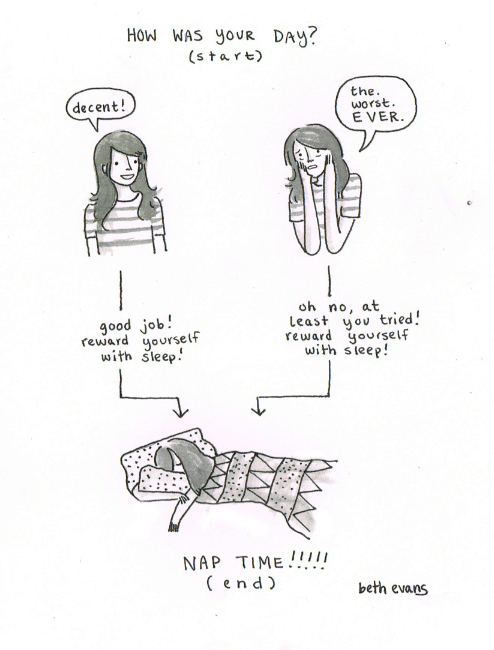
Don’t beat yourself up if you can’t maintain a routine around studying. Maybe you tend to go to an exercise class once a week or you’re found in the cinema every Friday. These things are important to keep up but they’re not the be all and end all- but then neither are exams. The key is to strike a healthy balance between working and looking after yourself. If you think of your brain like a sponge, it’s not likely to absorb any more water if you’ve been soaking it for three hours. Go out, get some air, watch TV or chat to a friend and let all that information soak in so that you’re ready to absorb more later on. You might think you need to spend hours on end in front of your notes, but once it starts to become ineffective because you’re overwhelmed, you’re just wasting time you could be spending catching up on Agents of SHIELD. See revision as that perfect time to also perfect your nap technique. Sleep helps you consolidate your learning- so snuggle up with that duvet, it’s all part of the process.

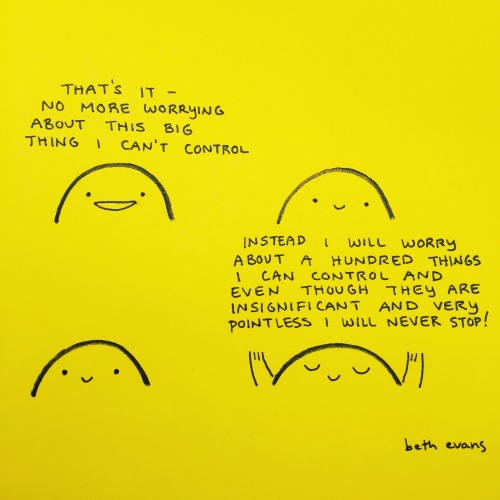
A lot of stress can come from feelings of not being in control. This can be overcome with good organisation and planning- if by the exam you know you’ve done everything you need to, you’re bound to feel more relaxed. Work out how long you have until your exams and use these dates to plan in a deadline. Spread your revision out over those days and it’ll seem like much less work than if you cram it all in last minute. Break your exams down- where are the marks allocated? There’s no point revising something you don’t understand if it’s worth two marks and you could be nailing those two marks if you revise something you do know. You can’t learn everything, much as we’d all like to. Split your revision up by topic and try and do different topics each day- that way if you’re struggling with something, it’s only a matter of time before you can move onto something else that you do understand.

Make use of your lecturers, classmates and tutors. They’re at university to help you learn or to learn themselves, and teaching is one of the best methods to do so- so ask them to teach you. It might just be that hearing it said in someone else’s voice is enough to get it stuck in your head. Perhaps they have a memorable accent or like to make it into funny songs. Maybe they have a really random way of thinking that just suits you better- whatever it is, it’s worth finding out if they can help.
Don’t set yourself ridiculous amounts of work and cut out all fun things. Nobody can work for ten hours a day no matter what they claim- and the people who sit in libraries for ten hours just keep those seats warm for a really long time and don’t actually achieve that much. They also terrify those of us who are actually get stuff done, which is entirely unproductive because hey, we’re getting stuff done. Then again, if you actually can work for ten hours solid, well done you- but go for a swim afterwards or watch a movie because your brain will need a rest. Nobody is impervious to burnout, not even the medics who basically live in the library.

And finally, remember these (and I’m a medic, so I can’t lie):
-          Exams aren’t everything. Retakes are a thing, employers won’t look at your marks, and grades don’t define who you are. Maybe you’re an excellent pianist, but you can’t see that on a biology paper. Perhaps you’re an amazing volunteer or the kindest person to have ever walked the Earth, but that won’t show up on a maths test.
-          Think about how far you’ve come. You’re at university! You have a 100% success rate for days lived! You have made it through those awkward teenage years! You’re living in an age where your tweets will never be as weird as Kanye West’s!
You got this.

LOVE KATIE XOXOXOXOXO

Tuesday, 23 February 2016

Mental health and art

It is hard enough trying to acknowledge to yourself that you are struggling, that you think you may need help- and that's with being able to experience your own feelings and try to make sense of them. Explaining them, getting them out in a way that makes sense and articulates what you're feeling to someone else, is even harder. Armed with a dictionary, there are still never going to be enough words to convey the nuances of what you're feeling sometimes- so many turn to art.

Art is an easy way to convey feelings because whilst people may not have time for a conversation, they have 10 seconds to look at a comic. You don't have to leave the house or see anyone face to face to show how you're doing. There is more humanity, more chances to relate to a picture than to words that can be very exacting and not open to interpretation.

It's a way to express yourself without ever having to say anything to anyone. It can be anything you want in any form you like, whether that's paint or pencil or sculpture or food. Many turn to dance or music. Art in general is about interpretation- so you can convey everything you want in the way that you want. You don't have to worry about offending people, or worrying people, or anything like that- it's entirely for you. It's a really good way to work through what you're thinking about and to stimulate your mind into thinking deeper around it, but safely. You don't have to find the words, nothing has to be exact.

It doesn't even need to be any kind of problem that leads you to art. Many feel that art allows them to express any feelings they may have whether these are positive or negative. Art is a way to communicate without having to be constrained by words.

Some of the blogs that Nightline likes to help explain mental health include:

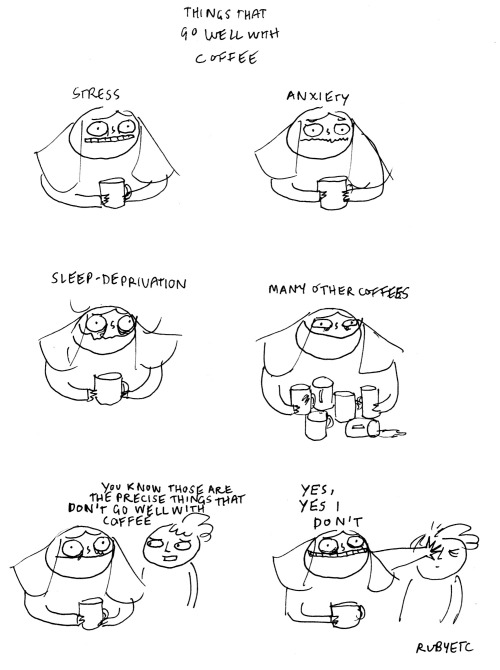
Ruby Etc - Ruby has often created the cartoons for both Mind, the mental health charity, and Buzzfeed Mental Health week. She can be found on both tumblr and twitter.


As ever, if you'd like to talk about any issues you may have, please phone Nightline and chat it through with us :)

LOVE KATIE.

Thursday, 11 February 2016

Sleep deprivation and what it does to you.

As students, it's well known we often go without sleep. Hardly a teen movie goes past without a mention of the dreaded all-nighter, whether it's for coursework, essays or revision. As young adults we're often classed as lazy, expected to sleep well into the afternoon if left to our own devices- but it's not true. We have 9am lectures, 10am seminars, and then we're expected to run till late into the night or early morning to make the most of the 'university experience' whether that's through sports or clubbing or extra-curriculars. Heap on top of that the sheer amount of work lecturers expect you to do, and you're left with not enough hours in the day- and sleep is the easiest thing to sacrifice.

People aged 18-25 should be aiming for around 7-8 hours of sleep a night. With work and play and potentially even mental health all feeding into it, only 15% of us manage it regularly.


The consequences of even a tiny lack of sleep can be horrific- so listen up!

1. A lower stress threshold. When you're already in a stressful environment, being more susceptible to stress is never going to be helpful. Tiny things like going to the shops, getting dressed for lectures, meeting a friend can suddenly seem insurmountable.

2. Increased mood changes. Tiny little things become the most annoying things ever when you're tired. Dropped your toast? Why don't you cry over it, your tired brain tells you. You're suddenly having to put energy you don't have into keeping yourself going and some things are bound to slip. It takes effort to stay happy and sociable, and being tired makes it much more difficult.

3. Decreased memory capacity.
Deep sleep fosters the formation of connections between neurons, and REM sleep aids in memory formation. An all-nighter really is a silly option when you consider that all the revision you've already done could slip, and nothing you learn during the night will stick if you don't sleep on it afterwards. Studies have shown sleep deprived people have less long and short term memory skills than those who have slept for longer periods of time.

4. Difficulty concentrating. If all your power is going into keeping your eyes open and your brain on, less is available for paying attention. For the same reason we want well rested doctors and teachers, you need to be awake, properly awake, to understand and process what's going on around you. Without sleep, fine details are often missed- whether that's remembering to add sodium hydroxide to your flask or finishing off painting the end of the piece. Just an hour of lost sleep decreases your alertness by up to 32%.

5. General slowness. Everyone's experienced the way the day lags when you're tired, but you do, too. You think slower, you write slower, you react slower. Not the most useful for when you're trying to scribble down notes or answer exam questions or get a delicate experiment finished. It takes you longer to brush your teeth, to cross the road, to do anything.

6. Increased food consumption. Not the best for the student on a budget, missing out sleep makes you hungrier (because you need to get that energy somewhere). You also lose the pleasure response to eating food, so your brain tells you that you need to eat more until you're happy and satisfied. It increases your body's need for high levels of fat and carbohydrate, which are more likely to make you gain weight if they're not part of a balanced diet.

7. Increased risk of accidents. Sleep deprivation is the #2 cause of automobile death in under 25s (second only to drink driving.) Your reaction time is slower and you're more likely to fall asleep at the wheel. Sleep deprivation is the #1 overall cause of workplace accidents.

You might think you can adapt to lack of sleep. But I've always slept for 5 hours! I hear you cry. The thing is, after a while of not sleeping, you lose the ability to gauge whether your judgement is impaired and you're sleep deprived. In the chronically sleep deprived, it can lead to similar symptoms to being drunk- and we've all heard of the consequences alcohol can have, we're uni students.

So sleep well. Turn your computer off, put your phone away, read a book and have a hot drink. Have a hot bath or shower before you sleep, because the temperature change between hot water and room temperature makes you sleepy. Make sleep just as an important part of your revision schedule as revising. If you're having trouble sleeping, try exercising to tire yourself out. If you're still having trouble, consider seeing your GP.


Wednesday, 18 November 2015

10 Ideas To Kickstart (And Continue) Your Ambassador Journey

Why should you become a London Nightline Ambassador? Apart from the snazzy title, you will help Nightline reach out to more students within your university. You can also fundraise to aid Nightline in the important work that it does, while gaining invaluable experience.
After some contemplation, you are convinced. You would like to represent London Nightline at your university. However, you might think you have little or no experience in publicity or fundraising and are not sure where to start. But with training, your enthusiasm and the following list, you will have no reason to worry.

List of Possible Events or as I like to call it, How to Ambassador?

1)  Social Media Campaign
In today’s world where a majority of the students have access to social media, tweets and posts can be the biggest publicity assets to reach as many people as possible. The set-up is relatively simple: think of a fun and relevant social media campaign and try to get it viral. Ask your friends, family, neighbours, flatmates, fellow commuters and anyone else you can think of to participate and share it. The official social media platforms of London Nightline will be happy to help, as well as with any other events organised. Some examples of successful campaigns in the past have included a Q&A on Facebook, #pjsfornightline and #askNL.


2)    The Other Kinds of Media
Perhaps you feel that you cannot contain your enthusiasm within Twitter’s 140 characters? You could contact the magazines and newspapers of your university and write an article to spread the word about London Nightline. You could also get in touch with your university radio and organise a segment around Mental Health and London Nightline.
      
3)    Bear Hug Events
The description of this quintessential London Nightline event is in the name. You invite Nightline’s champion hugger and mascot, Neville, to provide students with a warm, friendly hug. His hugging skills have won him many awards over the years*. This presents a great photo opportunity as well as a chance for you to talk to students about what Nightline can offer them. Couple this with a social media campaign and you will have a hit on your hands.
*May be anecdotal


4)    Tea/Coffee Mornings
What better way to get the attention of bleary eyed students in the morning than offering them their caffeine fix in return for a quick chat about Nightline? Jazz it up with biscuits or cakes if you wish. This event has been run successfully by various organisations, most notably Macmillan.  

5)    A ‘TEDx’ Style Event
You could organise a mini-conference, inviting internal and/or external speakers to talk about Mental Health. The event can be further enhanced by introducing interactive workshops aimed at taking care of students’ mental health. 

6)    Confessions of a Student Campaign
‘Confessions’ is another popular Nightline event. On a postcard, students can write a confession – it can be anything: big, small, funny, serious etc. This reflects the ethos of Nightline: anyone can call in, no matter what their problem is. Confessions can be anonymously posted on London Nightline’s social media accounts to increase the publicity range. This event closely follows the principle of another global campaign,
Post Secret.


7)    Personal Challenges A.K.A Sponsored Events
Is there something you’ve wanted to do for a while but have always been a little scared or busy to do it? Why not take it up as a challenge and raise money for Nightline at the same time? You could also rope in friends or family to give you company. It could be any event; a marathon, bike ride or the toughest challenge of them all: switching your phone off for a day, to name a few. There are a number of websites that can aid you in organising donations such as JustGiving
.

8)    Bake Sale
A bake sale is one of the simplest ways to fundraise and promote Nightline. The nation’s love of all things baked has been reignited ever since Mary Berry graced our television screens with the Great British Bake-off, so why not try this simple recipe for cupcakes inspired by our beloved mascot, Neville?


9)    Grants
You can apply to the government, local councils or charities to obtain grant money, from as little as £50 up to £3000. While an application might seem a little daunting, Nightline will provide you with the necessary support. Another plus: this can be done from the comfort of your own room.

10) Miscellaneous Fundraising Events
There are a number of ways you can fundraise that are not just limited to collection buckets. Ticketed charity events such as Battle of the Bands, bowling, go karting etc are another great option. You could also contact other societies at your university and collaborate with them in organising a fundraising event.  
As an Ambassador, you will be expected to do a minimum of two events a term. Any one of the above ideas would count as an event, but feel free to get creative and remember to have fun! London Nightline will support you throughout with training, information, publicity materials as well as providing a small budget where necessary. If you have any queries, you can always turn to the friendly Ambassador’s Officer or the Coordinator. By being a part of the lovely London Nightline family, you will get a chance to work alongside your peers who are passionate about mental health and want to make a difference.

For more information about the programme, visit the website
. The 2015/2016 application form can be found here.

Best Wishes,

Gauri